Why Do Packaging Barriers Fail at Moisture Control? A Comparative Insight on Moisture Vapor Transmission Rate
Introduction — a small spill, a big lesson
Have you ever opened a box of sheets or a bag of snacks only to find them damp and sad? I have, and it taught me to pay attention to the smallest things. In many tests the moisture vapor transmission rate shows how easily water vapour slips through a film or a seal, and that number often predicts product trouble down the line.
Imagine a warehouse where humidity hits 75% for a week. A carton with a slightly porous seal can let in enough moisture to ruin a batch — we’re talking spoilage rates jumping by double digits in some trials (and yes, I’ve seen the spreadsheet). So what goes wrong between lab numbers and real life?
We tend to assume a material that passes a standard test will perform the same on a truck or a shelf. But field conditions are messier. Temperatures swing, seals age, handling adds stress. I’ll walk through the gaps I’ve seen — the flawed assumptions, the hidden pains — and point toward more useful checks. Next up: the deep dive into why common fixes miss the mark.
Deeper Issues: Why Traditional Tests Miss the Mark
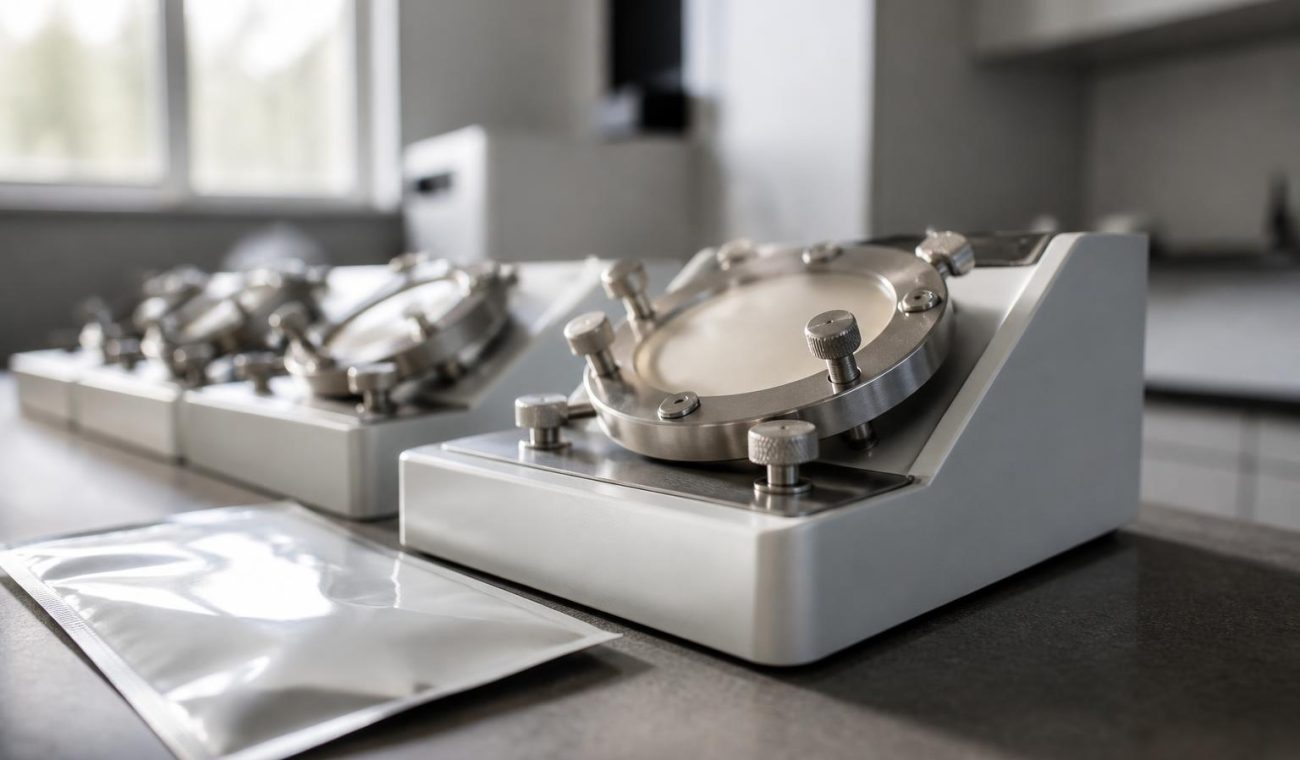
When teams rely only on a single device, results can be misleading — that’s where a water vapor transmission rate tester helps, but only if you use it properly. I’ve run dozens of tests with humidity chambers and seen readings change when a sample sits flat versus when it’s curved. Permeability and porosity interact with real handling stresses. Calibration matters. Sensor drift matters. Edge effects at seals matter.
What usually goes wrong?
First, we expect uniform samples. In reality, films have micro-variations. Second, standard test conditions are stable. Real shipments are not. Third, many teams forget the human factor — package designers and line operators tweak things. Look, it’s simpler than you think: if you test only at 23°C and 50% RH, you miss what happens at 5°C or 80% RH. I’ve also noticed that power converters and data loggers, when not maintained, add noise to results — and that noise hides the real failure modes.
Looking Ahead: Better Measures and Practical Steps
We need tools and methods that mimic the real world. That means combining a reliable water vapor transmission rate tester with stress tests: cycles of temperature, bent samples, and real-world seals. New tech principles — like accelerated ageing with controlled humidity ramps — help predict lifetime performance without waiting months.
What’s Next?
In practice, I recommend three clear evaluation metrics for choosing solutions: measured MVTR across multiple conditions, seal integrity under mechanical stress, and long-term stability (watch for sensor drift). These are simple checks, but they force teams to think beyond a single lab pass. Also — funny how that works, right? — the cheapest film that passes one test often fails when you add handling and time. So we must be deliberate.
To sum up, don’t treat lab numbers as gospel. Use a mix of lab rigour and field realism. I’ve learned to trust layered testing: basic permeability data, then targeted stress tests, then batch-level sampling in the field. That approach reduces surprises and gives teams real confidence. If you want a reliable partner on the testing side, consider established equipment from Labthink. They make the gear — and the results — easier to trust.